
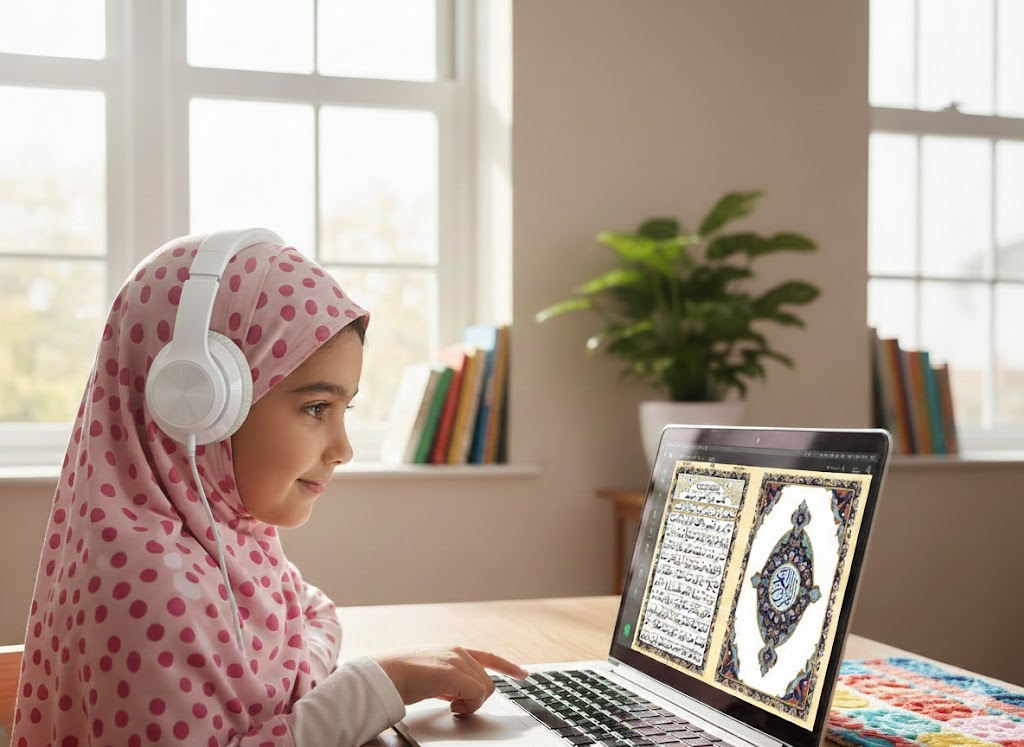
Online Arabic Classes for Kids
Online Arabic Classes for Kids help children learn Arabic reading, writing, speaking, and Quran recitation from qualified native Arabic tutors. At Learn Quran Kids, we provide one-on-one Arabic lessons designed specifically for children of all ages.
Online Arabic classes for kids are everywhere right now. And honestly, they have made life so much easier for parents.
No more rushing to weekend schools or settling for whoever teaches nearby. Your child can sit at home and learn from a native speaker on the other side of the world.
Sounds great, right? But picking the right class is where most parents get stuck. Does online learning even work for young kids? How much should you spend? What should a good tutor look like?
This guide answers all of that. By the end, you will know how to choose the right online Arabic classes for kids and support your child’s learning journey with confidence. Arabic learning for children has never been this accessible or this affordable.
Why Are Parents Choosing Online Arabic Lessons for Kids?
The world went digital. Education followed. In 2026, more families are signing up their kids for online lessons than at any point before.
So, what changed?
Flexibility is the big one. You pick the time. You pick the teacher. Your child learns from the comfort of home without anyone rushing out the door.
It also holds deep meaning for millions of families. Some parents want their kids to read the Quran with proper Tajweed. Others want them to speak Arabic for travel, career, or just to stay connected to their roots.
Here is the problem, though. Finding a good teacher locally is tough. In many areas, qualified tutors simply do not exist. Online classes fix that overnight. That is exactly why learning Arabic online for kids has grown so fast in the last few years.
And let us be real. Kids today are glued to screens anyway. They attend school and play games online every day. Arabic lessons for kids now come in so many formats that every family can find a fit.
What Will Your Child Learn in These Classes?
Before you sign up for anything, it helps to know what these programs actually cover. Most platforms teach a mix of the following.
Quran Reading with Tajweed is the number one reason parents look for Online Quran classes. Kids learn to read the Quran with correct pronunciation and proper rules. Arabic reading classes for kids usually start right here with basic recitation and word recognition.
Arabic Alphabet and Writing is where every beginner starts. Your child will learn all 28 letters, how they connect, and how to write from right to left . Arabic writing classes for kids focus on stroke practice, letter joining, and neat handwriting drills. As children progress, they also develop a stronger understanding of Arabic vocabulary and sentence structure.
Modern Standard Arabic (MSA) is the formal version you hear on the news and read in textbooks across the Arab world. It builds a solid academic base. Modern Standard Arabic for kids opens doors to school-level content used across the Middle East. MSA classes for kids usually cover formal reading, grammar basics, and simple comprehension exercises. Many parents know it as Fusha Arabic classes for kids.
Conversational Arabic is where kids actually start speaking. Some tutors teach specific dialects like Egyptian, Levantine, or Gulf. Arabic-speaking classes for kids focus on real conversations, greetings, and phrases they can use every day.
What Is the Best Age to Start?
Parents ask this one all the time. Short answer: the earlier, the better. But each age group needs a different approach.
- Ages 3 to 5: This is the play and repeat stage. Songs, colors, animal names, and short videos do the heavy lifting. Formal lessons are too much at this age. Kids Arabic classes at this level work best when they feel like playtime, not homework.
- Ages 6 to 10: This is the sweet spot. Children can sit for 30 to 45-minute sessions without losing focus. They start reading, writing, and building vocabulary in a real structured way. Beginner Arabic classes for kids keep the pace slow and build one skill at a time.
- Ages 11 to 13: Pre-teens can handle grammar, longer reading passages, and even basic conversation practice. They also start preparing for exams at this stage. A good Arabic course for kids will always match the content to the child’s age and attention span.
Weekend Arabic Classes for Kids
Not every family has time for extra classes during the week, and that is completely understandable. Between school, homework, and other activities, weekdays can get busy. That is why we also offer weekend Arabic classes for kids.
Saturday and Sunday classes give children the chance to learn without feeling rushed after a long school day. Whether your child is starting with the Arabic alphabet, learning Quran reading with Tajweed, or practicing spoken Arabic, our tutors keep each lesson engaging, relaxed, and suited to your child’s pace.
Weekend classes are available in flexible time slots, making it easy for parents to choose a schedule that fits their family’s routine while helping children stay consistent with their learning.
Start Learning Arabic from Home
Looking for flexible and effective online Arabic classes for kids? Our personalized lessons fit your family’s schedule and make learning enjoyable for every child. Contact us today to choose the right course and connect with an experienced Arabic tutor for kids online.
How to Find the Best Arabic Tutor for Kids Online
Finding an Arabic tutor for kids online sounds stressful. It really is not. You just need to know what to look for and where to look.
What to Look for in a Good Tutor
Here is the thing. Not every speaker is a good teacher for kids. Teaching children is a completely different skill.
A great tutor is patient. They are energetic. Kids lose focus fast, and a good tutor knows how to pull them back without making it feel like punishment.
Check their credentials too. A degree in education or a Quran Ijazah shows they know their stuff. A good online Arabic tutor for kids will also adapt their style based on your child’s personality and speed.
The tools matter just as much. Digital whiteboards, colorful slides, games, and small rewards keep young learners hooked. Live Arabic classes for kids allow real-time feedback that no app or pre-recorded video can match.
And do not skip the safety check. Make sure the platform runs background checks on every tutor. Your child’s security always comes first.
Online Arabic Classes for Kids: Tutor vs App vs Group Class
Three options. Each one works differently. Here is a quick side-by-side so you can compare.
Feature | Private Tutor | Learning App | Group Class |
Personal Attention | Very High | None | Medium |
Cost Per Month | $40 to $120 | Free to $15 | $25 to $60 |
Flexibility | High | Very High | Low to Medium |
Child Engagement | High | Medium | Medium to High |
Progress Tracking | Tutor reports to parents | Auto-generated stats | Varies by platform |
Best For | Serious learners, Quran focus | Casual practice, vocabulary | Social learners, budget-friendly |
One-on-one Arabic classes give the most personal attention, while group sessions bring a social energy that some kids really thrive on.
Give your child the opportunity to learn Arabic in a fun, engaging, and supportive environment. Our experienced teachers provide interactive lessons that help children build confidence in reading, writing, speaking, and understanding Arabic. Book a free trial today and let your child begin their Arabic learning journey.
Common Mistakes Parents Should Avoid
Good intentions do not always lead to good results. Here are mistakes that slow kids down more often than parents realize.
No clear goal. Quran reading? Speaking? Exams? Your goal shapes the whole journey, so figure it out before you start.
Chasing the cheapest option. A low price tag does not always mean poor quality. But skipping the trial class is a gamble you should never take. One bad tutor can waste months of your child’s time.
Too many classes. Three sessions a week are plenty for most kids. Daily hour-long classes burn them out faster than you would expect.
Not staying involved. Online learning still needs a parent in the picture. Sit in once in a while. Ask what they learned today. That small effort shows your child you actually care.
Tips to Help Your Child Succeed
Signing up is just the beginning. What happens at home matters just as much as what happens in class. Arabic language classes for kids work best when parents stay active and involved outside of lessons, too.
Stick to a schedule. Same days, same times, every week. Kids do better when they know what to expect.
Set up a proper learning space. A clean desk, a decent internet connection, and a headset go a long way.
Play Arabic cartoons in the background. Listen to nasheeds during car rides. Label items around the house with Arabic words. Small daily habits create lasting results and help children become more confident learners. Many beginners also benefit from learning Noorani Qaida before progressing to advanced Arabic reading lessons.
And celebrate every win. Finished the alphabet? That is a big deal. Learned a new surah? Even bigger. Positive energy keeps kids going when things get tough.
How Long Will It Take to See Results?
Every kid moves at their own speed. But here is a rough timeline with two to three classes per week.
- After 1 to 2 months: Your child will know the Arabic alphabet and basic connecting rules. They may start reading simple words on their own.
- After 3 to 6 months: Short sentences become easier. Quran students may begin reading small surahs with Tajweed.
- After 1 year: Most kids can read paragraphs with real confidence. Conversational learners can hold basic back-and-forth dialogues.
Our Arabic teachers for kids are experienced, patient, and trained to make learning enjoyable for children. Every private Arabic tutor for kids provides personalized one-on-one Arabic lessons tailored to your child’s age, learning level, and goals.
What Makes Our Tutors Different?
- Native Arabic Tutors: Children learn authentic pronunciation, vocabulary, and communication skills from native Arabic-speaking teachers.
- Male and Female Teachers Available: Parents can choose the teacher they feel most comfortable with for their child’s learning journey.
- One-on-One Personalized Lessons: Each lesson is customized to match your child’s pace, strengths, and learning objectives.
- Experienced with Children Worldwide: Our tutors have experience teaching students from the USA, UK, Canada, Australia, and many other countries.
- Flexible Class Scheduling: Choose class timings that fit your family’s routine, including weekdays and weekends.
Why Choose Learn Quran Kids?
With so many platforms out there, what makes Learn Quran Kids different?
Every tutor is a native Arabic speaker with real experience teaching kids. Classes are fully one-on-one, so your child gets complete attention the entire session.
The curriculum is structured but flexible. Quran reading, Arabic alphabet, conversational skills. Learn Quran Kids has a clear path for each goal.
Parents get regular progress updates and can switch tutors anytime without hassle. Pricing stays honest with no hidden charges and no long term contracts.
Every new family gets a free trial class. No commitment. Just a chance to see if it clicks.
How to Get Started with Learn Quran Kids
Getting your child enrolled takes just a few minutes.
- Visit the Website: Head over to Learn Quran Kids and explore our Arabic language courses, Quran classes, Tajweed rules, and Hifz programs. Choose the course that best matches your child’s learning goals.
- Book a Free Trial: Every family gets a free first class. Your child meets the tutor, tries a short lesson, and you see exactly how things work. No payment is needed at this stage.
- Choose Your Schedule: Pick the days and times that suit your family. Morning, afternoon, or evening. The schedule works around you, not the other way around.
- Start Learning: Once the schedule is locked in, your child begins their classes. The tutor follows a clear plan and adjusts the pace based on how your child responds.
Final Thoughts
Online Arabic classes for kids have made this whole process easier, cheaper, and way more accessible for families everywhere. Quran reading, fluent speaking, cultural connection: whatever your goal is, the right class and tutor can get your child there.
Start with a clear goal. Take your time finding a qualified tutor for kids online. Book a few trial classes before you commit. Stay involved in your child’s learning every step of the way.
Your child does not need to master it overnight. They just need the right support and a routine they can stick to. The rest honestly takes care of itself.
So go ahead. Book that first trial class today. One small step is all it takes to get started.
Frequently Asked Questions (FAQs)
Most kids can begin around age 4 or 5. At that age, lessons are short, playful, and focused on the alphabet and basic words. However, structured reading and writing usually kick in around age 6.
Two to three classes a week hits the sweet spot for most kids. It gives them enough practice without burning them out. On top of that, even 15 to 20 minutes of daily revision at home speeds things up a lot.
Yes, as long as you pick the right platform. Good platforms run background checks on all their tutors. Also, most classes happen on a video call, so you can sit nearby or watch anytime.
Absolutely. Most online Arabic programs start at a complete beginner level. The tutor will begin from scratch with the alphabet and basic sounds. Your child does not need any prior knowledge at all.
A laptop, tablet, or even a smartphone with stable internet works fine. Some platforms have their own apps too. Just make sure the screen is big enough for your child to see the tutor and shared material clearly.