Arabic Alphabet for Kids: A Simple Guide for Parents and Beginners
Learning a new language will open doors that never close. One of the most beautiful doorways for kids is the Arabic alphabet.
It exposes them to a rich culture, soft sounds, and the language of the Quran. Each shape learned is a little key in their hand.
This guide is simple to read and explains everything in ordinary language. There are answers to parents’ most frequently asked questions, tips, and ideas.
Take a cup of tea, sit next to your child, and enjoy the ride together.
What is the Arabic Alphabet?
The Arabic alphabet is the collection of words used in the Arabic language. It seems very different from English on the surface. The shapes curve. The flow is artistic!
The script is read from right to left. That’s the reverse in English. Children are immediately aware of this and sometimes find it pretty cool.
Arabic Alphabet is a unique Arabic writing system that dates back more than many centuries. It is used by over 400 million people each day. It supplies books, signs, songs, and prayers worldwide.
Children may enjoy the way that the letters appear more like little pictures. That is a very attractive look and makes the Arabic letter easy to enjoy from the very beginning.
Why Should Kids Learn the Arabic Alphabet?
Young brains grow when new letters are learned. It improves memory, concentration and pattern recognition. The benefits go far beyond reading and writing.
With children learning Arabic, they are linked to a global community. They receive a head-start in the study of Islam. They are able to read greetings, names, and short verses from the Quran easily.
Early language learning also enhances vocabulary development in other subject areas. Children learning two scripts tend to develop Arabic reading skills more quickly. They begin to take the habit of changing gears.
The Arabic alphabet for kids is more than just letters. It’s a window into a whole new world of culture, prayer, and meaning. That’s a gift to give!
At What Age Can Children Start Learning Arabic Letters?
There’s no perfect age. But sooner is better. Many parents begin their young toddlers at 3 or 4 years old.
Preschool Arabic lessons are based on sounds, songs, and shapes. No pressure to read or to write yet! The purpose is exposure and fun.
Kindergarten Arabic follows this with easy tracing and matching exercises. Most children have strong reading readiness by age 5. They begin to identify shapes in the environment.
Older children will do fine as well. They are like sponges when it comes to patterns. Keep it short, light, and fun. The 10 minutes a day are worth it!
How Many Letters Are in the Arabic Alphabet?
There are 28 letters in the Arabic alphabet. That’s just two more than English. Easy to remember, right?
But here’s the twist. The shape of each letter depends on its position in a word. The Arabic letters are written in four different styles.
The same letter can appear in different ways at the start, middle, or end or as an isolated letter. At first, sounds tricky. Children learn more quickly than those who watch them.
The secret to teaching kids the Arabic alphabet is helping them recognize the basic shape behind each letter. After that, the variations take place naturally.
What is the meaning of the Arabic letters and their sounds?
Each letter has its own sound. Certain sounds are familiar, such as “b” or “m.” Others originate from the deeper parts of the throat.
Letters such as “ʿayn” or “qāf” are slightly more difficult. That is where Arabic phonics comes into play. Most of the time, it takes a couple of weeks of soft practice to do the trick.
This is where an Arabic alphabet chart is very helpful. Pin it on the wall. Point to a letter. Say the sound. Have your child repeat after you.
You will have confidence in Arabic every day with clear Arabic alphabet pronunciation. Your child will recognize all the sounds of Arabic letters after a while, without hesitation. The Arabic letters for kids live when you make learning fun!
How Is the Arabic Alphabet Different from the English Alphabet?
The primary difference is direction. The first time you come across right-to-left writing, it can fool you. Books open from what we would consider the ‘back.’
Sentences go in reverse order. The opposite page also flips. It takes a couple of days to get used to this. After that it is normal.
Then the letters link up. Most Arabic characters are connected to the preceding and following character. It’s similar to cursive writing in English.
This is also the case with the vowels. Small marks above or below the letters represent short vowels. These little marks make a big difference to pronunciation. English characters are block print letters; Arabic is a ribbon-like style.
How Can Kids Learn the Arabic Alphabet Step by Step?
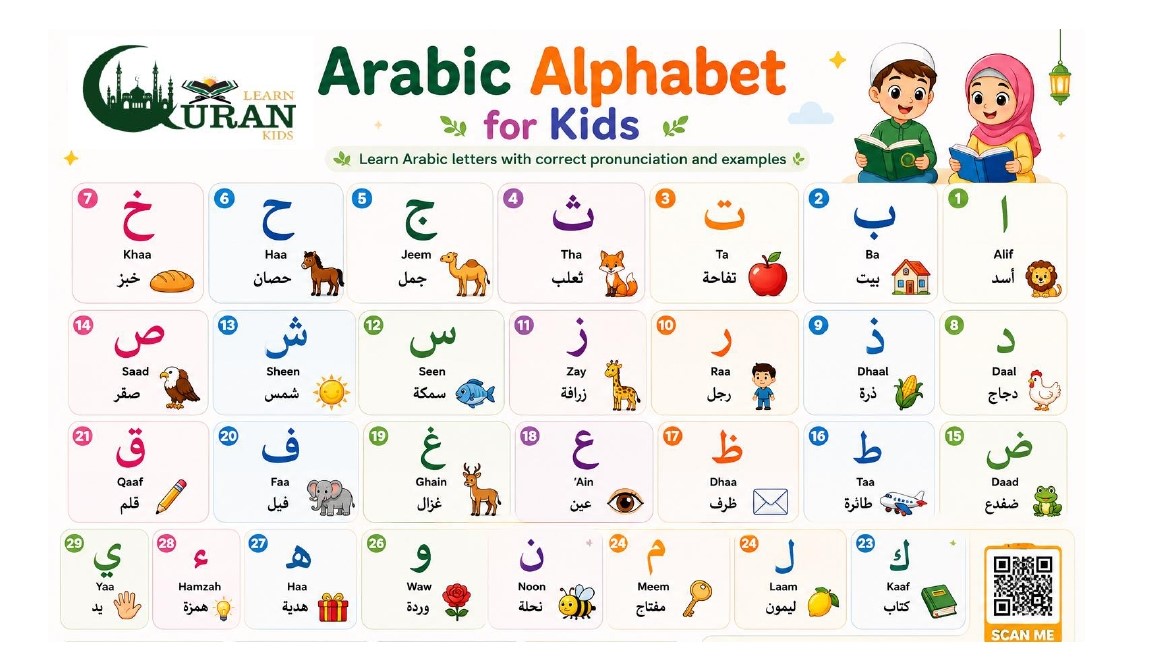
It is easier when learning happens step by step. Here is a simple route that works for most children. Begin with the shapes. Use large, brightly coloured posters.
Match each shape with its sound. Repeat a couple of times throughout the day. Keep it brief and to the point. Do not give long, arduous lessons.
Move on to writing. Start with tracing the alphabet, then write real Arabic on lined paper. Learn the Arabic alphabet through easy matching activities and games.
Once your child is familiar with 10 to 15 Arabic letters, they can begin to build small words. Start by reading short phrases. Then short verses. Arabic lessons for beginners should never be a burden, only a fun activity. The goal is to learn Arabic letters one small win at a time.
What Are the Best Activities to Teach Arabic Letters to Children?
Activities make learning fun. Children need to be active and playful to learn. The Arabic alphabet for children makes it more like a playtime than a lesson.
Below are some of the most useful teaching activities for young learners in learning Arabic:
- Arabic flashcards to practice fast and colourful and on-the-go
- Fine motor and quiet time worksheets in Arabic.
- Kids’ Arabic games such as memory match, bingo and letter hunt.
- Arabic songs for children that fix letters in the mind.
- Sand or salt trays to write letters into with little fingers.
- Small dose letter recognition apps that are interactive, bright and screen friendly.
- Simple, repeated print story books with large letters.
Mix and match. Rotate activities weekly. Hands on play is a gradual development of real Arabic writing that fends off boredom.
How to make learning Arabic fun at home?
Does not require teachers. All you have to do is show up. The most important motivator for your child is their interest.
Use sticky notes to label everyday objects. Test the door, fridge, chair and lamp. Every note is a mini lesson. Read an Arabic story before sleep (at night).
Sing letter songs in the car. Place bright posters and books in a small “Arabic corner.” Make your learning of the Arabic alphabet quick and fun. Give a high-five or a sticker for every little achievement.
Children absorb your energy. Smile in lessons; smile in learning. Here’s the secret of Arabic for kids. When effort is made joyful, it sticks.
What is the importance of learning the Arabic alphabet for reading the Quran?
It is here that it all gets together. The Quran is written in standard Arabic. Your child must have the letter and their sound to read it correctly.
The Arabic alphabet for kids is the starting point of Quran reading. Both Surahs and each Ayah begin with those 28 letters. It is not a way to avoid them.
Allah’s first word to the human race was beautiful and easy:
اقْرَأْ بِاسْمِ رَبِّكَ الَّذِي خَلَقَ
“Read! In the name of your Lord who created.” (Surah Al-Alaq 96:1)
That one word, “Read,” determined all that followed. Educating your child on these letters brings in the same spirit today.
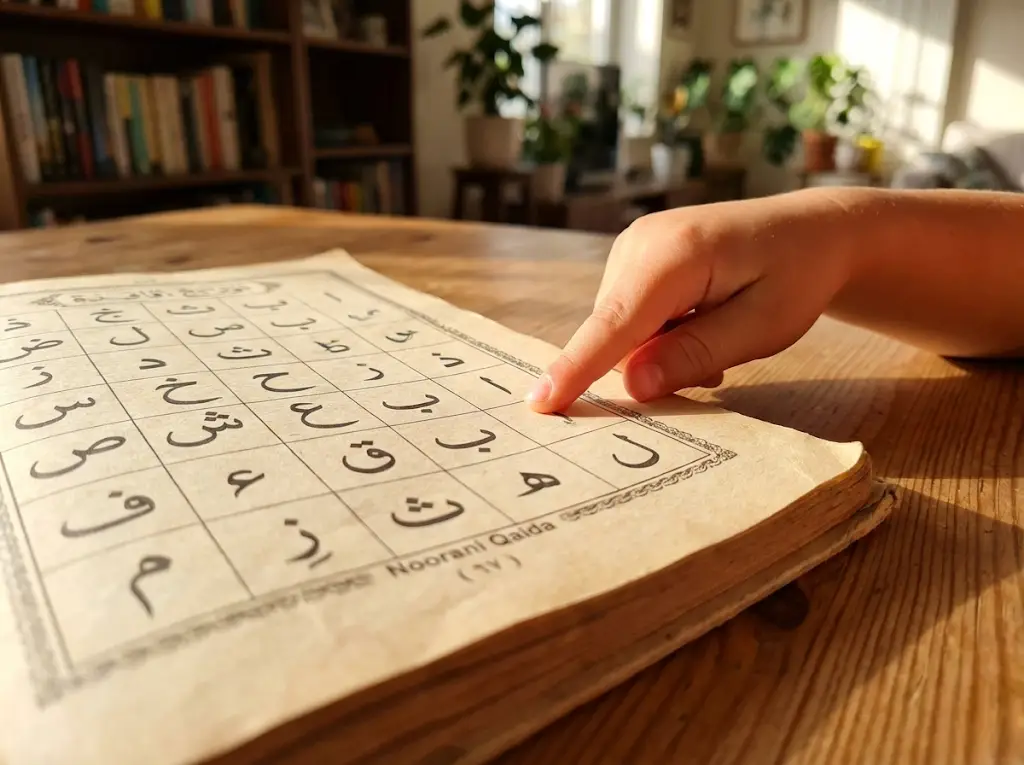
Following the Noorani Qaida, there is the Quran Kareem. A friendly little book between letters and Quranic Arabic. For most children, it is very routine.
These are the rules of Tajweed basics. These guides correct pronunciation, pauses, and tone. Everything becomes simpler for children after they have mastered the Arabic alphabet.
Why Choose Learn Quran Kids for Your Child’s Quran Education?
Learn Quran Kids is a safe and fun way to help your child learn the Quran at home. Children are focused and motivated at all times by interactive lessons.
One-to-one classes with experienced male and female tutors. They teach at your child’s speed and establish confidence with each lesson.
Easy learning for busy families, flexible class times. Your child also learns the correct Tajweed and pronunciation to build a solid foundation in the recitation of the Quran.
Conclusion
Choosing to begin children’s schooling with the Arabic alphabet is one of the best decisions a parent can make. It’s a combination of language, culture, faith, and fun!
Use songs, flashcards and Use stories. Whatever your child enjoys the most, use it. It doesn’t matter what the format is; it’s about the consistency you bring to it.
Online Arabic classes for kids are an excellent choice for those who don’t have a lot of time to spare. Your little one will learn all the shapes and sounds with a patient Arabic tutor for children. There are also many families who decide to teach their children Arabic online with live lessons or through an app.
No matter which course you follow, follow it through. Stay kind. Stay patient. It’s the journey that counts, and the Arabic alphabet for kids is only the start.
Frequently Asked Questions (FAQs)
Q1. How to teach the Arabic alphabet to children?
Begin with sounds, not writing. Utilize songs, flashcards, and colorful pictures. Be brief and limit sessions to 10-15 minutes per day. Combine practice and play and see the magic.
Q2. What is the weekly number of letters to be memorized?
Most children do best with about 3 to 5 letters per week. Some go faster. Some go slower. Both are fine. Focus on understanding before speed.
Q3. Can children learn the Arabic letter list without knowledge of Arabic?
Yes, absolutely. Many children begin with letters before learning the whole language. The Arabic alphabet for kids is a gateway, not a wall.
Q4. Are online Arabic classes effective for kids?
These can be very effective. Live Arabic lessons for children provide authentic feedback, engaging visuals, and structured learning. Search for short courses, helpful instructors, and engaging resources.
Q5. How can I help my child practice Arabic letters every day?
Create a mini habit. Five minutes after breakfast time. A song in the car. 1 letter prior to bedtime. Little and often is better than a lot and long.
Q6. Do kids need to learn Arabic writing along with letter recognition?
Yes, but step by step. The first to come with recognition is recognition. Writing follows naturally. Tracing helps develop your child’s muscle memory.
Q7. What should children learn after mastering the Arabic alphabet?
Then proceed to short words, and then to phrases. Present the Noorani Qaida. Once you start learning basic Quran reading with simple verses. The Arabic alphabet opens the next door after each step.