
How to Learn Arabic for Kids: A Complete Parent’s Guide (Home & Online)
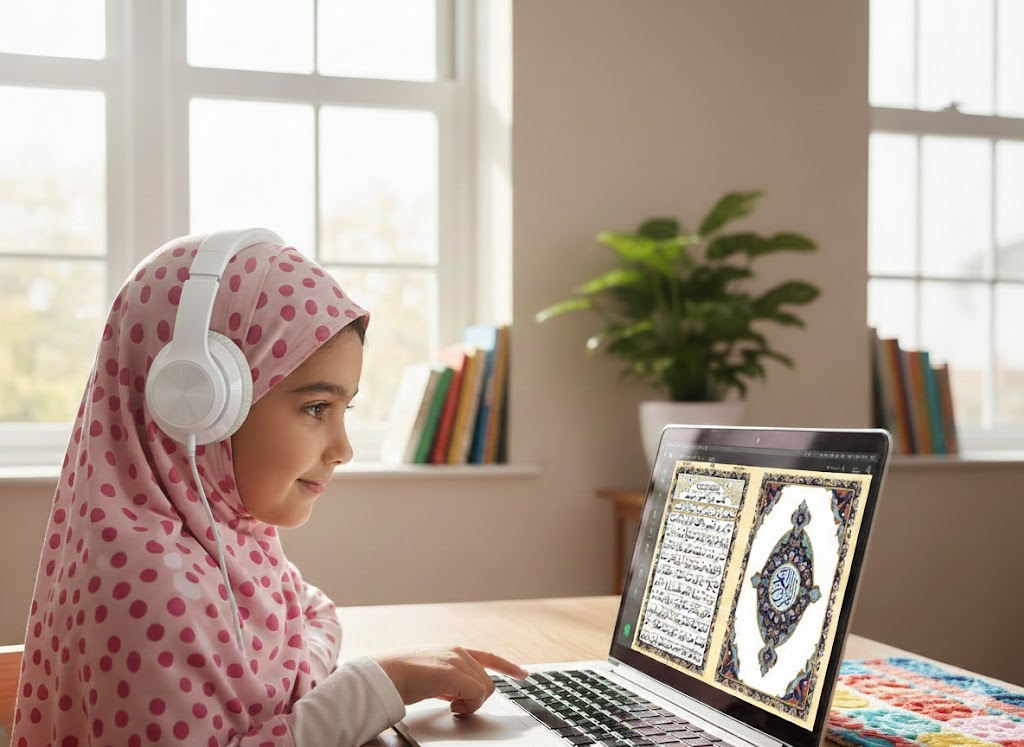
Teaching your child Arabic may seem challenging at first. Maybe you aren’t sure where to start or which approach to take. The good news is that it’s possible to have an easy way of learning through proper learning strategies.
Start with small steps. Tackle the skill one at a time. Make it fun and teach your child just a bit each day, and practice, practice, practice! Whether teaching at home or online, consistency is key to your child’s learning.
In this guide, you’ll learn how to teach Arabic to your child step by step. You will also learn the best teaching methods, helpful learning aids, and what to avoid, as well as when online Arabic lessons may be a good idea!
Why Is It Important to Learn Arabic for Kids?
Learning Arabic is not just about a new language; it’s about a new culture. It gives them a good understanding of the Quran, fills their Islamic knowledge, and enables them to speak with confidence. Young children learn to hear new sounds and new words more readily when they begin at an early age. They also develop excellent reading, writing, listening, and speaking abilities over time.
Understand the Quran
Your child is going to learn Arabic to understand the Quran and more than just learn it by rote. They start to learn the words and meaning of the Quran. This helps to establish a greater relationship with the Quran and promotes Islamic knowledge.
Build Language Skills
Arabic enhances your child’s reading, writing, listening, and speaking skills. They get confident to use the language as they learn new words and simple sentences. These skills also contribute to language development generally.
Strengthen Islamic Knowledge
The language of the Quran, hadith, and many Islamic books is Arabic. With learning Arabic, they get a better understanding of daily duas, Salah, and basic Islamic vocabulary. This helps to build their bond to their faith.
Support Cognitive Development
Your child’s brain is challenged in a positive manner while learning Arabic. It enhances memory, concentration, and problem-solving. Children practice at regular intervals, which also allows them to identify patterns and learn new words more readily.
Create Future Opportunities
Arabic is one of the most commonly used languages in the world. If they learn it at an early age, it can benefit not only their education but their career as well. It also enables them to communicate with people who speak Arabic and learn about various cultures.
How to Learn Arabic for Kids
Your child can learn Arabic easily! Focus on one skill. Make lessons short and enjoyable. Below, let’s take a look.
Set a Clear Goal
Determine your kids’ learning objective. Think about reading the Quran with them, teaching them some Arabic, or developing language skills. If there’s a clear goal, select an appropriate method of learning.
Start With The Alphabet in Arabic
Introduce the 28 Arabic letters first and then words or sentences. Do 3 to 4 letters per week. Practice saying their names, sounds, and shapes together. Keep learning fun with alphabet charts, tracing worksheets, and flashcards.
Introduce The Sounds of Arabic First
Support your child’s ability to listen and repeat the Arabic sounds prior to reading. Recite the Quran every day, recite simple Arabic rhymes every day, or children’s songs every day. Listening helps develop pronunciation and helps your child get ready for reading.
Build Everyday Vocabulary
Read and teach those words that your child will need to read daily. Include topics that are familiar to them, e.g.,
- Family members
- Body parts
- Colors
- Numbers
- Animals
- Fruits and vegetables
- Household items
Use these words in your everyday speech. Your child can practice them regularly, and it will stick with them.
Practice Simple Arabic Phrases
Help your child learn to say simple phrases all day long. Use greetings, polite expressions, and common questions. Use these phrases with your child as often as possible in your everyday routine.
Make Learning Fun
Ensure all lessons are made enjoyable. The following tools are used: Flashcards, Puzzles, Stories and matching games, and simple nasheeds. Your child will enjoy the activities, and it will be easier for him or her to learn.
Don’t Change Your Daily Routine
Study the Arabic language for 10-15 minutes a day. It’s better to have short lessons than a long one once a week. Reread and read several new words and praise small successes. Practice makes progress.
Expert Tip: Children learn languages more effectively through short, consistent practice sessions than through long weekly lessons. Aim for 10–15 minutes of Arabic practice daily.
When Should Parents Consider Online Arabic Classes?
Home practice is a good means of learning for many children. However, some children need extra support to develop and make progress more rapidly.
Let’s look at some of the indications that your child would benefit from online Arabic classes.
Trouble With Pronunciation
Some Arabic alphabets and sounds present difficulties to students. Children who struggle with pronunciation will be helped by a qualified teacher to learn the correct sounds and become more confident.
Needs Structured Lessons
A regular schedule helps some children. New material is introduced in structured lessons. They also provide sufficient time to work it out before they move on.
You Don’t Speak Arabic
Don’t worry; you don’t have to speak Arabic to assist in his learning. You can encourage and support your child at home, and a qualified teacher can lead each lesson.
Needs Help with Quran Reading
To read the Quran, one must have a sound knowledge of the Arabic letters, sounds, and pronunciation. These skills will be taught in guided lessons and then expanded upon in more complex reading.
Make Steady Progress
While daily practice is necessary, sometimes expert guidance can help learning be more effective. It prevents typical pitfalls and gives him confidence in his improvement.
Want to make learning easier? Along with daily home practice, structured online Arabic classes for kids can help your child build confidence, improve pronunciation, and develop strong Quran reading skills at their own pace.
What Are Harakat and How Does Your Child Practice Reading?
Harakat are little marks that appear above or below a letter. They instruct your child in the sound they need to produce when making a vowel sound. If they are not there, a letter would not have a distinct sound.
Start teaching Harakat after the letters. Start with the three short vowels. Then add the long vowels and the special marks.
The table below will make it abundantly obvious.
Table 1: The Arabic Harakat and Vowel Sounds
| Harakat / Vowel | Mark on Letter Baa (ب) | Sound It Makes | How to Read It |
| Fatha (short a) | بَ | short “a” | “ba” |
| Kasra (short i) | بِ | short “i” | “bi” |
| Damma (short u) | بُ | short “u” | “bu” |
| Sukoon (no vowel) | بْ | stops the letter | “b” |
| Shadda (double) | بّ | doubles the letter | “bba” |
| Tanween (adds n) | بً / بٍ / بٌ | adds an “n” sound | “ban/bin/bun” |
| Long vowel Alif | بَا | long “aa” | “baa” |
| Long vowel Waw | بُو | long “oo” | “boo” |
| Long vowel Yaa | بِي | long “ee” | “bee” |
Once your child knows these marks, real reading begins. Move in small steps so they feel each win. The ladder below shows a gentle path from single letters to short ayahs.
Table 2: Simple Reading Practice Ladder
| Stage | What Your Child Reads | Example |
| Stage 1 | Single letter with one vowel | بَ , تُ , مِ |
| Stage 2 | Two letters joined together | بَتَ , مَنَ |
| Stage 3 | Short three-letter words | كَتَبَ (kataba) |
| Stage 4 | Words with long vowels | كِتَاب (kitaab) |
| Stage 5 | Short Qur’anic words and ayahs | قُلْ , الْحَمْدُ |
Take your time and go to the next until you feel confident. Gradual and sustained development of true confidence in reading is essential.
Recommended Arabic-learning resources for kids.
Learning resources keep your child engaged and practise learning Arabic in different ways. These are some of the most popular:
-
Storybooks
Read simple Arabic storybooks together. They help build vocabulary, pronunciation, and reading ability.
-
Schoolwork and Flashcards
Flashcards: Letters and Words. Utilize tracing and writing sheets.
-
Songs, Games, and Coloring
Take advantage of songs, puzzles, matching games, and coloring to learn Arabic.
-
Arabic Learning Apps
Utilize apps with interactive lessons appropriate for children. To improve results, include some time for off-screen activities.
-
Live Online Lessons
Learn Quran Kids is providing and supporting their confidence by building it up in small steps.
What Common Mistakes Should Parents Avoid?
Very enthusiastic parents do make mistakes. Skip these common traps and move ahead faster.
- Avoid planning too large. Teaching all of the letters in one week drives a child nuts. Always small batches!
- Never miss the listening part! Some parents start right in on writing. Your child must first hear Arabic; their tajweed, or the sounds on their tongue, will feel odd.
- Please do not rush to learn to write well. Allow yourself to have fun with the letters before you correct each stroke. Neat writing is a later development.
- Don’t rely on a single tool. The fact that it is an app is very quickly dull. Blend songs, books, games, and real talk.
- Never make comparisons with other children. All children progress at their own rate. Their joy keeps them going, but pressure can kill it.
- Don’t give up if it’s been a bad week. There are weeks when it just feels like nothing is happening. Repeat the activities and watch the improvement.
Why Choose to Learn Quran Kids for Your Child?
The right learning platform can give your child the confidence to learn. Learn Quran Kids makes learning Arabic and the Quran easy, fun, and enjoyable for kids.
They will receive:
- One-on-one live classes
- Available male and female teachers.
- Beginner-friendly lessons
- Learning Arabic and Quran at the same time.
- Interactive teaching methods
- Flexible class schedules
- Regular progress tracking
- Customized instruction ability
- Take a virtual tour from the comfort of your home!
Conclusion
Making a child love Arabic doesn’t require expertise. A clear goal, a few minutes a day, and a warm heart. Start with sounds. Add the letters. Develop the words in everyday activity. Be lighthearted and consistent. They’ll gradually be able to read the words of the Qur’ān with confidence and joy.
Start Arabic Journey Today
Ready to help your child learn Arabic with confidence? Join Learn Quran Kids for one-on-one Arabic and Quran lessons taught by experienced teachers. Book your free trial class today and make Arabic learning simple, engaging, and enjoyable.
Frequently Asked Questions (FAQs)
Q1. What is the best age to start teaching Arabic to kids?
The first years are the best. Children learn sounds easily from 3 to 6 years. Nevertheless, it’s never too late. Older children can learn as well, with a bit more work.
Q2. How long does it take a kid to pick up Arabic?
It varies based on the objective and the work. Many children can read simple Arabic in one to two years with just 10 to 15 minutes of daily reading. The more you speak, the longer it takes.
Q3. Can I teach my child Arabic if I am not fluent?
Yes, you can. Numerous parents are learning next to their child. Use native audio for correct sounds; have a simple plan and be consistent. It’s the effort that counts more than the level.
Q4. What is the difference between spoken Arabic and Qur’anic Arabic?
The Arabic language is spoken differently in different countries and is used in everyday conversation. The Arabic used in Qur’anic Arabic remains unchanged regardless of place and is the language of the Qur’an and salah.
5. Which resources work best for teaching Arabic at home?
Consolidate some tools. Use flash cards, tracing paper, an Arabic learning App, simple storybooks, and audio from a native reciter.
Q6. How much time should we practice each day?
Small and frequent rewards. One long weekend session is not as effective as 10 to 15 minutes per day. Very young children have a shorter attention span.
Q7. Should my child learn to read before speaking?
Give listening priority. Then, reading and speaking can develop concurrently. In a family with the main concern being the Quran, reading is the primary activity.
Q8. Is it a good idea to teach Arabic to young children via apps?
They can aid, if applied properly. Choose an application that has an easy-to-hear sound and rewarding features that are enjoyable. Limit screen time, and when possible, sit with your child.
Q9. Do the Harakat need to be taught from the start?
Initially teach the letters and then the Harakat in due course. The vowel marks break down the code for reading and are very similar to the alphabet.
Q10. What if my child mixes up letters that look similar?
It’s okay. Letters like Baa, Taa, and Thaa look alike. Click on the dots and practice together until the distinction is apparent.